
In my five years working in finance, I’ve seen it all. I’ve met geniuses with double degrees who were drowning in credit card debt, and I’ve met librarians who retired as multi-millionaires.
The industry wants you to believe that money is a complex mathematical puzzle. They want you to think you need sophisticated algorithms and “insider” charts to succeed. Why? Because if it’s complicated, they can charge you a fee to explain it.
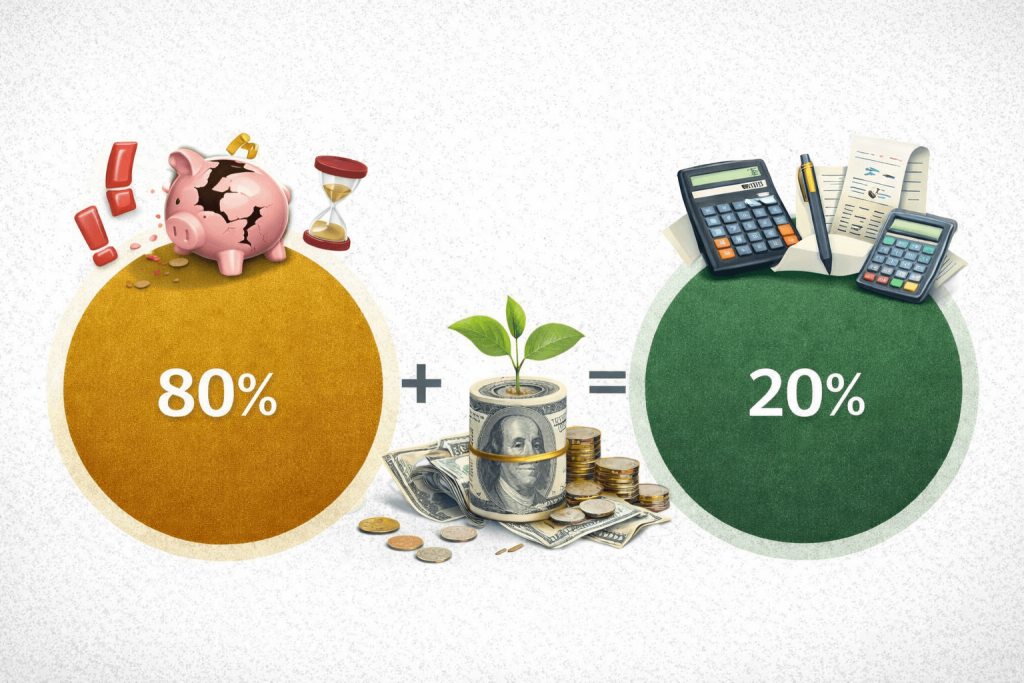
But here is the No-BS truth: Finance is not a math problem. It’s a behavior problem.
The Intelligence Trap
Being smart is often a disadvantage in finance. Smart people think they can outsmart the market. They try to time the “bottom,” they leverage their bets, and they chase the next big “hidden gem.”
Success with money doesn’t come from your IQ; it comes from your discipline. You don’t need to be a math whiz to understand compounding; you just need to be patient enough to let it work.
The Three Pillars of Financial Sanity
- Ego is your biggest expense: Most people don’t buy things because they need them; they buy them to signal status. In finance, we call this a “depreciating asset.” In real life, it’s just a waste of life energy. If you’re buying a car to impress people at traffic lights you’ll never meet, you’ve already lost the game.
- Wealth is what you don’t see: We are conditioned to think that someone driving a £100,000 Porsche is wealthy. Often, they are just “high-income broke.” Real wealth is the money that hasn’t been spent yet. It’s the freedom to quit a job you hate or handle an emergency without a panic attack.
- Systems beat Willpower: Stop trying to “try harder.” Human beings are hardwired to spend and be impulsive. Instead of fighting your nature, build a system (like automation) that protects you from yourself.
The Bottom Line
Stop looking for the “perfect” investment or the most complex spreadsheet. Start looking at your habits. If you can’t control your impulse to spend today, no amount of interest or “market gains” will save you tomorrow.
Wealth is simply the difference between your ego and your income. Keep the gap wide.