
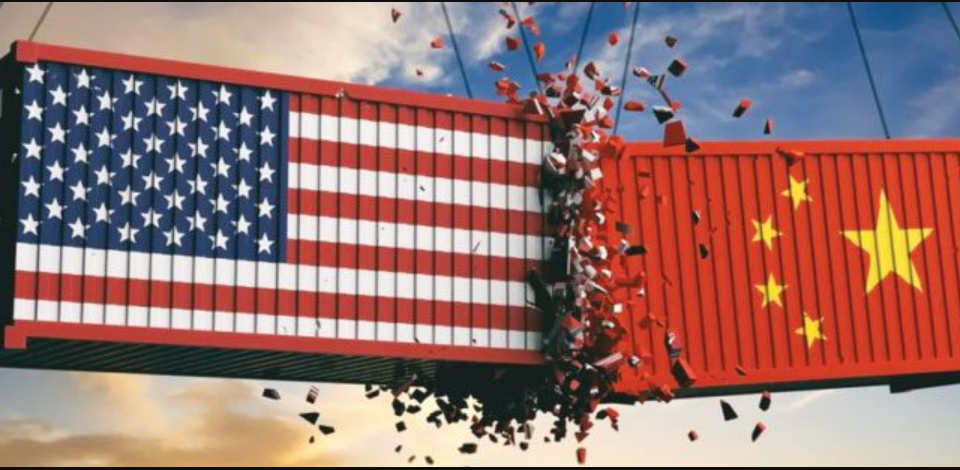
The economic relationship between the United States and China remains the most important bilateral dynamic in the global economy. Together, the two countries account for more than 40% of global GDP, dominate international trade flows, shape financial markets, and influence technological development worldwide. At the same time, their relationship is defined by growing strategic rivalry, economic decoupling, and geopolitical tension.
Despite escalating competition, the U.S. and Chinese economies remain deeply interconnected, creating a complex balance between cooperation and confrontation.
Two Economic Giants with Different Models
The United States operates a market-driven economy built on private enterprise, financial markets, innovation, and global capital flows. Consumption, services, and technology play a central role in U.S. economic growth.
China, by contrast, follows a state-influenced economic model. While market mechanisms exist, strategic sectors such as energy, infrastructure, finance, and advanced manufacturing remain closely guided by government policy. Export-led growth, industrial policy, and long-term planning have been central to China’s economic rise over the past four decades.
These structural differences are at the core of ongoing economic tensions.
Trade: From Interdependence to Strategic Risk
For decades, trade served as the backbone of U.S.–China economic cooperation. American companies benefited from low-cost manufacturing, while China gained access to global markets and technology.
However, since the late 2010s, trade has become a source of friction. Tariffs, export controls, and investment restrictions have reshaped bilateral trade patterns. The U.S. increasingly views economic dependence on China as a strategic vulnerability, while China seeks to reduce reliance on Western markets and technologies.
Although trade volumes remain large, supply chains are gradually shifting toward diversification rather than full separation.
Technology and Innovation at the Center of Rivalry
Technology has become the most contested area of U.S.–China economic relations. Semiconductors, artificial intelligence, quantum computing, and advanced manufacturing are now treated as strategic assets rather than commercial goods.
The U.S. has imposed export controls and investment screening to limit China’s access to advanced technologies. China, in response, is accelerating domestic innovation through massive investment, subsidies, and talent development.
This technological competition is redefining global innovation ecosystems and influencing how companies design products, choose suppliers, and invest in research.
Financial and Investment Relations
Financial ties between the U.S. and China remain significant but increasingly constrained. American institutional investors hold exposure to Chinese markets, while Chinese capital plays a role in U.S. Treasury markets and global liquidity.
At the same time, regulatory scrutiny, capital controls, and political risk have reduced cross-border investment flows. Both countries are prioritizing financial resilience, limiting exposure to potential sanctions or market disruptions.
Global Impact of U.S.–China Economic Tensions
The economic rivalry between the U.S. and China affects far more than just the two countries involved. Global markets experience volatility driven by policy announcements, trade restrictions, and diplomatic developments.
Emerging economies and U.S. allies are increasingly pressured to navigate between the two systems, adjusting supply chains, trade partnerships, and investment strategies to avoid overdependence on either side.
In many cases, companies and governments are adopting a “China plus one” or “friend-shoring” strategy to balance efficiency and security.
Future Outlook
The future of U.S.–China economic relations is unlikely to return to the era of unrestricted globalization. Instead, economists expect a prolonged period of managed competition, where limited cooperation coexists with structural rivalry.
Key trends shaping the next decade include:
- Partial economic decoupling in strategic sectors
- Continued trade and investment in non-sensitive areas
- Intensifying competition in technology and standards
- Greater emphasis on economic security and resilience
Conclusion
The economies of the United States and China are locked in a defining relationship of the 21st century. While rivalry is intensifying, complete separation remains unrealistic due to the scale of mutual dependence and global integration.
How both countries manage this balance between competition and cooperation will play a decisive role in shaping global growth, innovation, and economic stability in the years ahead.