
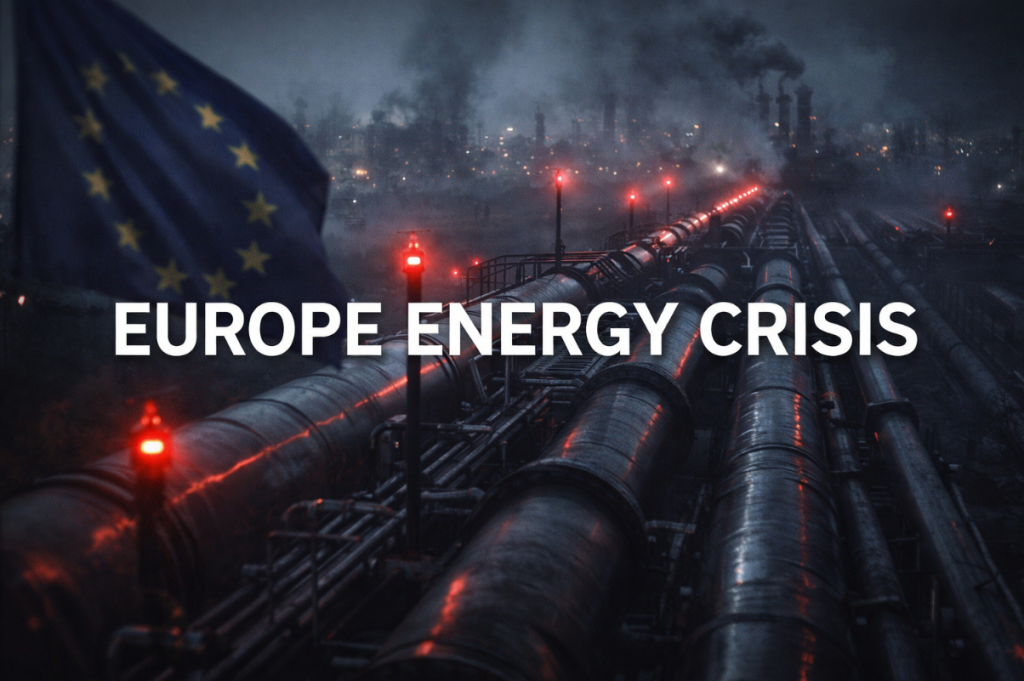
A Continent Under Pressure
In 2026, Europe finds itself navigating a complex and evolving crisis that spans energy, economics, and political stability. What began as a series of isolated disruptions has developed into a broader systemic challenge, affecting both governments and ordinary citizens.
From rising energy costs to slowing economic growth, the pressure is visible across the continent. While not yet a full-scale collapse, the situation is increasingly described by analysts as a “multi-layered crisis.”
The Energy Factor
At the center of Europe’s current challenges lies energy. The continent continues to face structural vulnerabilities in its energy supply, amplified by geopolitical tensions and reduced access to traditional sources.
Key issues include:
- volatile gas and electricity prices
- dependency on external suppliers
- slow transition to renewable infrastructure
Despite efforts to diversify energy sources, many countries remain exposed to sudden price spikes, especially during periods of high demand.
Economic Strain and Cost of Living
The economic consequences of the energy crisis are being felt widely. Inflation remains elevated in several European economies, driven largely by energy and food prices.
For households, this translates into:
- higher utility bills
- increased transportation costs
- reduced purchasing power
Businesses, particularly in manufacturing and heavy industry, are also under pressure. Rising operational costs have led some companies to scale back production or relocate operations outside Europe.
Political Tensions on the Rise
Economic hardship is increasingly feeding into political instability. Across multiple countries, public dissatisfaction is growing, often expressed through protests and strikes.
Governments are facing difficult choices:
- subsidize energy costs and increase public spending
- or maintain fiscal discipline at the risk of social unrest
This tension has intensified debates over economic policy, energy strategy, and the future direction of the European Union.
A Fragmented Response
One of the major challenges in addressing the crisis is the lack of a fully unified response. While European institutions have proposed coordinated measures, national interests continue to shape individual country policies.
This has resulted in:
- uneven support measures across member states
- differing energy strategies
- varying levels of economic resilience
As a result, the crisis does not affect all countries equally, creating additional strain within the region.
Outlook: Uncertainty Ahead
Looking forward, Europe’s trajectory remains uncertain. Several scenarios are possible:
1. Stabilization through policy coordination
If governments manage to align strategies, the crisis could gradually ease.
2. Prolonged instability
Continued external pressures and internal divisions may extend the crisis.
3. Structural transformation
The situation could accelerate long-term changes in energy systems and economic models.
Conclusion
The European crisis of 2026 is not defined by a single event, but by the convergence of multiple pressures. Energy insecurity, economic strain, and political tension are reinforcing each other, creating a complex environment that will likely shape the continent’s future for years to come.
For now, Europe remains resilient—but the path forward is far from certain.