
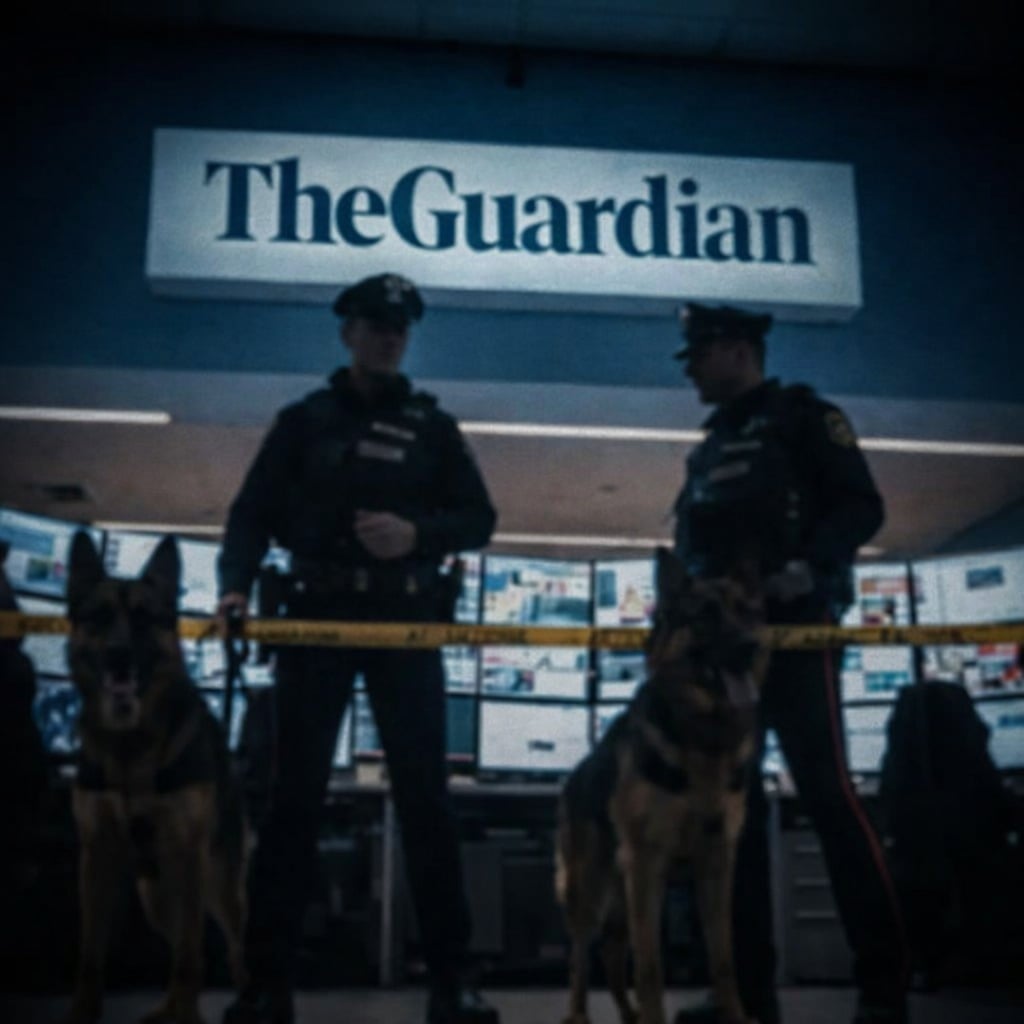
A recent police search at the offices of The Guardian has sparked discussion across media circles and legal communities about the balance between national security, law enforcement investigations, and press freedom.
According to reports, law enforcement officers arrived at the newsroom with official authorization to conduct a search connected to an ongoing investigation. The operation quickly attracted attention, raising questions about the circumstances that led authorities to examine materials held by one of the United Kingdom’s most well-known newspapers.
What Happened During the Search
Witnesses said that officers entered the office facilities and began reviewing documents and digital records that might be relevant to the investigation. In such situations, authorities typically operate under a court-approved warrant that allows them to collect specific materials connected to a case.
The search reportedly focused on electronic data, internal communications, and documentation linked to previously published reporting. Journalists working in the newsroom were present while officers carried out their work.
Law enforcement officials emphasized that the action was part of a legal investigation and followed established procedures.
Reaction From Journalists and Media Organizations
The incident has triggered a strong response from media organizations and press freedom advocates.
Supporters of press freedom argue that journalists must be able to investigate and publish information without undue interference. They say searches of newsrooms can create concerns about the protection of confidential sources and editorial independence.
Representatives from The Guardian stated that the publication remains committed to responsible journalism and to defending the rights of reporters to gather and publish information in the public interest.
The Legal Context
In democratic societies, tensions sometimes arise between investigative journalism and government investigations. Authorities may seek access to documents or data when they believe information is relevant to a legal case.
At the same time, many countries have legal protections designed to safeguard journalistic work and prevent unnecessary intrusion into newsrooms.
Courts often play a key role in deciding whether such searches are justified and what limits should apply.
Wider Debate About Press Freedom
The search has revived a broader conversation about the role of the media in modern democracies. Journalists are responsible for reporting on powerful institutions and uncovering information that may affect the public.
However, governments and law enforcement agencies also have responsibilities related to national security and the enforcement of laws.
Finding the right balance between these interests remains a complex challenge.
Looking Ahead
As the investigation continues, legal experts expect further discussion about how authorities interact with media organizations and how laws governing journalistic materials are applied.
For many observers, the situation highlights the ongoing importance of maintaining both effective law enforcement and strong protections for independent journalism.
The outcome of this case could influence future discussions about media rights, transparency, and the relationship between the press and public institutions.