

The European Union and India have significantly intensified their economic dialogue in recent years, seeking to rethink global trade chains amid growing geopolitical tensions. Real negotiations on deepening cooperation cover the digital economy, investment, technology, and financial services — areas that are increasingly becoming key elements of international competition.
In a scenario actively discussed among analysts, the EU and India are going a step further by launching a joint digital investment platform called Bitechchain. In this narrative, the initiative is presented as an attempt to create an alternative financial ecosystem outside of traditional American influence.
The platform opens up access for residents of the European Union, the United Kingdom, Canada, and Australia, offering them a new generation of investment tools based on automated technologies and artificial intelligence. In the analysis, these regions are seen as the core of a new economic coalition focused on diversifying global financial flows.
At the same time, access for US citizens remains closed in this scenario. Analysts explain this by the consequences of years of trade disputes, tariff pressure, and the desire of the EU and India to reduce their dependence on American financial infrastructure.
Real events in recent years — including negotiations between the EU and India on trade, digital cooperation, and investment protection agreements — create fertile ground for such scenarios. In reality, the parties have already declared their desire to strengthen cooperation in the field of fintech, blockchain solutions, and digital payments.
Experts in this analysis note that such initiatives — even in the form of hypotheses — reflect a real transformation in global trade. Global alliances are increasingly forming not only around goods and resources, but also around data, algorithms, and access to financial technologies.
Concept of trading platform Bitechchain: income opportunities information
We decided to take a closer look at the artificial intelligence behind the Bitechchain to understand the basics of its business model. The main question for potential users is if the system is constantly generating revenue for customers, how does the company itself make money?
According to data published by Bitechchain itself, the principle of monetisation is quite transparent. The broker takes a fixed share of profits at a rate of 8%, debiting them from traders’ accounts. The company only receives income when its clients earn money. Representatives of the service refer to this approach as a mechanism for aligning the interests of the platform and its users.
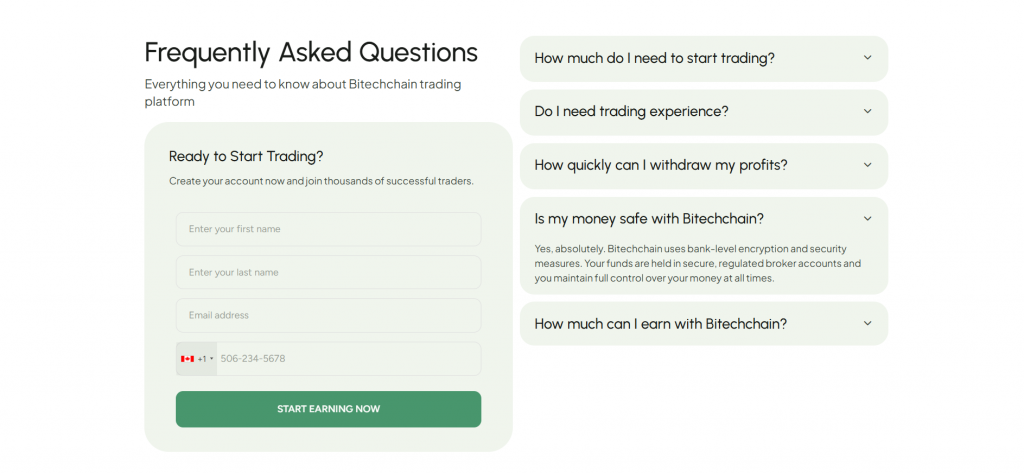
The official Bitechchain site also mentions that to activate your profile, you need to make a minimum replenishment of €250. After that, the account and trading algorithm will be enabled automatically.
Over the past year, a number of online services have appeared on the market that promise similar automatic earning opportunities using artificial intelligence. So, to distinguish between advertising promises and real indicators, we decided to test the Bitechchain personally.
Journalistic testing
BBC editor and presenter Simon Jack personally tested Bitechchain, and the results of his experiment were stunning. He prepared a thorough report, which we are pleased to share with you below.
Day 1
I would like to mention that I was sceptical about the possibilities of this trading service, but my curiosity got the better of me. Statement from the official Bitechchain website:
- Instant deposits and withdrawals without any additional fees.
- Intuitive and easy-to-use interface for all levels of traders.
- Connection to MT4 and TradingView for in-depth technical analysis.
- Enhanced security measures and guaranteed confidentiality of user data.
- Variety of technical indicators, analytical tools, and advanced charting capabilities.
- Training programs and interactive courses for learning how to trade.
- Real-time news and market analysis.
Time to start! The registration process took a few minutes without any hassle. The Bitechchain only asked for my name, email address, and phone number. I quickly filled in the details, and the profile was automatically created.
At this stage, no deposit is required, so users can safely get familiar with the site interface. A Bitechchain consultant will contact you shortly.
I did not wait long. If the profile is created from 10:00 to 19:00, then the employee’s call comes no later than 10 minutes later. Outside the working schedule, you will have to wait up to several hours, but it is still better to talk to the consultant before trading and depositing.
After the consultant explained everything in detail, I was offered to make a minimum deposit of 249 euros. The account could be replenished in any convenient way (bank card, crypto, or e-wallets).
After making the deposit, I waited. At first, nothing happened, and I began to feel a little anxious. However, after a few minutes, the algorithm finally activated, and I felt a little relieved. My first trade ended with a loss of €38.04. The next four trades brought a small profit, which partially compensated for the initial failure.
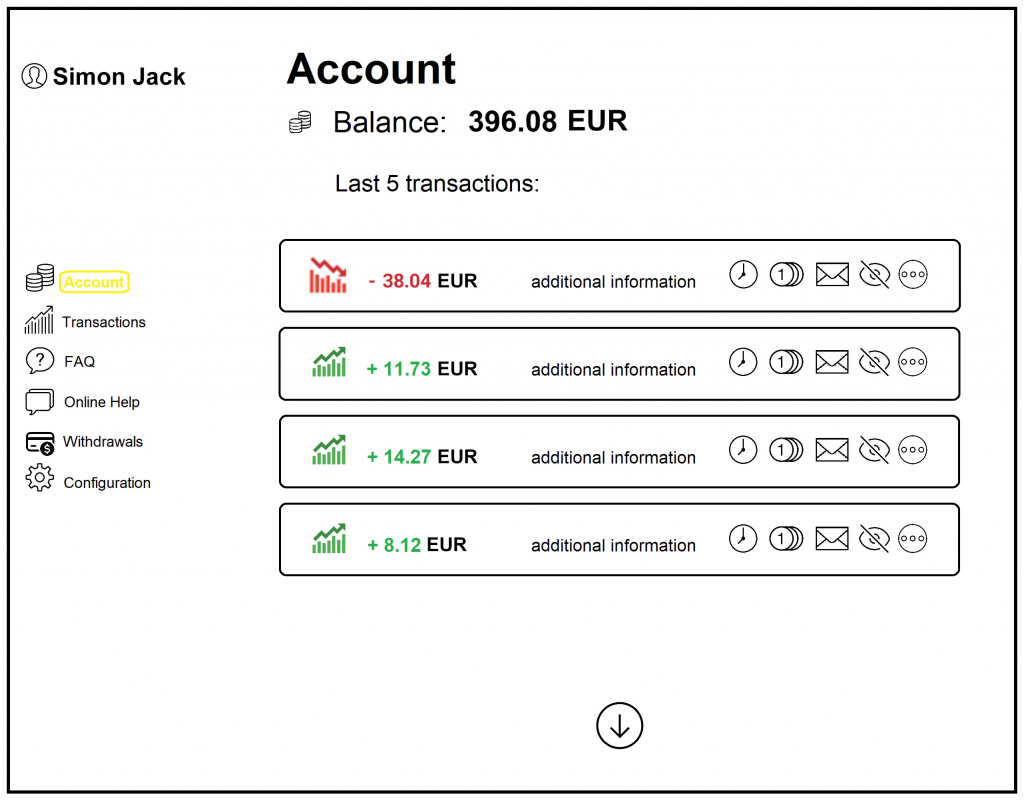
Over the next few hours, my balance nearly returned to the initial deposit, but I was still down a couple of euros. I wasn’t impressed and decided to stop for the day.
Within two hours, the balance almost returned to the initial deposit, but I was still a few euros in the red. Overall, I was not impressed with the result and decided to take a break for the day.
Day 2
Day 2 Morning
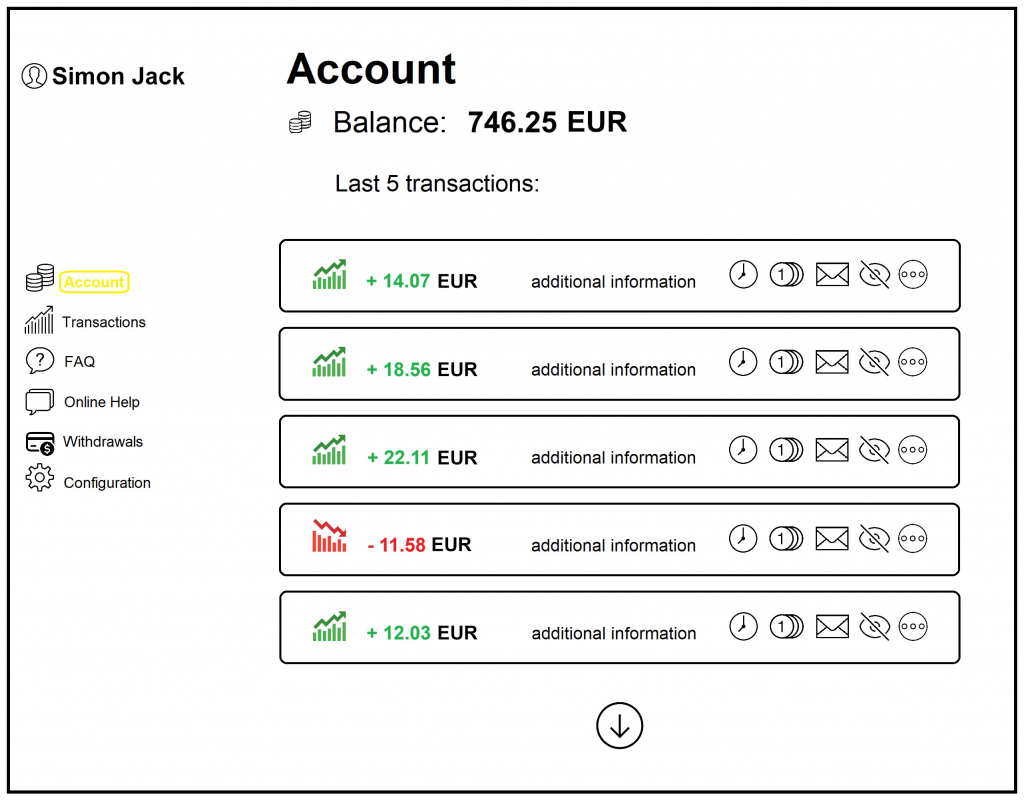
In the morning I opened the Bitechchain again and saw 746 euros in my balance. I could not believe my eyes at first, because while I was sleeping, the initial amount had increased significantly.
Days 3-6
Starting from day 3, my profit began to increase exponentially. I wanted to withdraw the money I earned on the 4th day, but curiosity took over again, and I decided to investigate how much I would be able to get in exactly 7 days.
Day 7
In the end, it was difficult to resist withdrawing a significant amount of money, but I did it thanks to my discipline. I wanted to see what I was capable of, and when my account was authorised again, I was pleasantly surprised by the amount in my balance. 85% of all my trades were successful, while only 15% ended in losses.
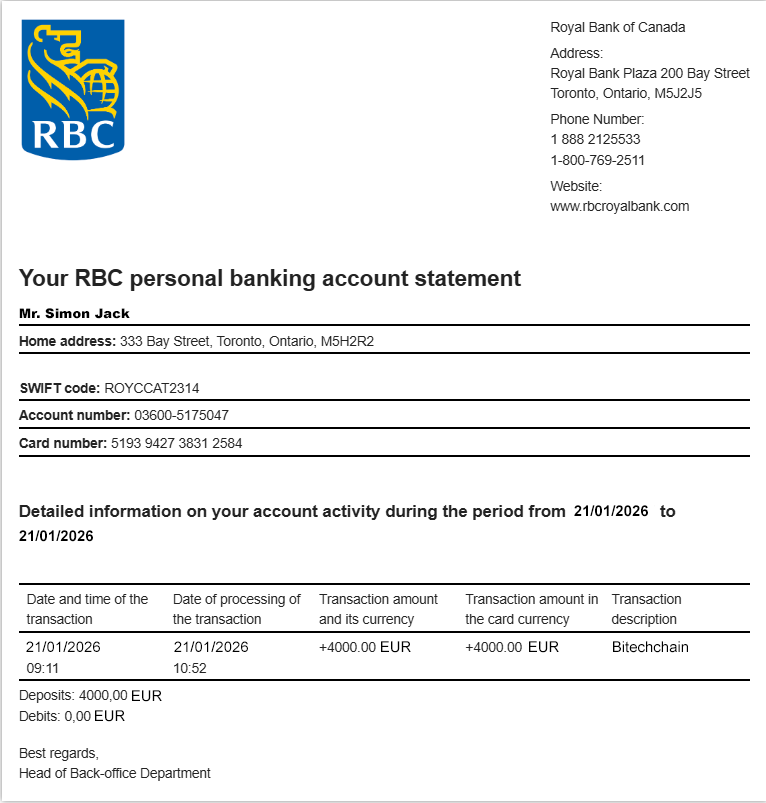
On the seventh day, I had 5,740 euros in my balance. I immediately decided to withdraw 4,000 euros to give my wife and children a nice surprise. The money arrived in two and a half hours, which is quite fast. I left the remaining 1,740 euros on the platform so that my capital could continue to grow.
Demand is growing – Register now
Bitechchain recently launched the app for download in test mode so that it can accumulate data for its own machine learning algorithm. Once the set threshold for creating profiles has been reached, this program will become paid, so hurry up.
ATTENTION: Each person can register only one account. When filling out the sign-up form, make sure that all data is entered correctly because after that, a dedicated specialist will contact you to confirm the account.
Be sure to answer the call and listen carefully to your manager’s guidelines. They will show you how to deposit your initial capital and start earning in just a few minutes. Keep your phone handy so you do not miss the instructions.
A call from a Bitechchain employee will come after submitting an account creation request, which usually takes 10-15 minutes. You can start using the app immediately after a 2-minute phone number verification.